


Vibration Testing Service
Vibration Testing Service
Ensure the Reliability of Your Products
BE Analytic is a NABL-accredited laboratory. BE Analytic has established a world-class test facility for quality and reliability assurance of different Mechanical, Electronic and Electromechanical Products.
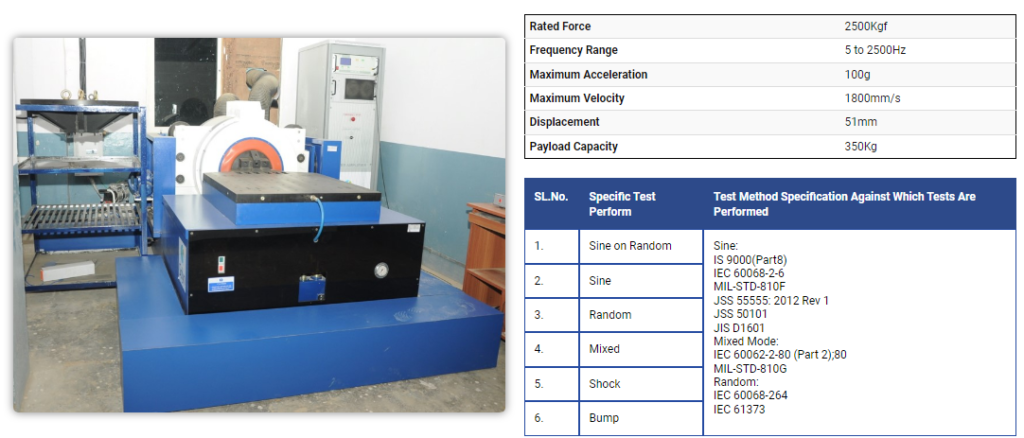
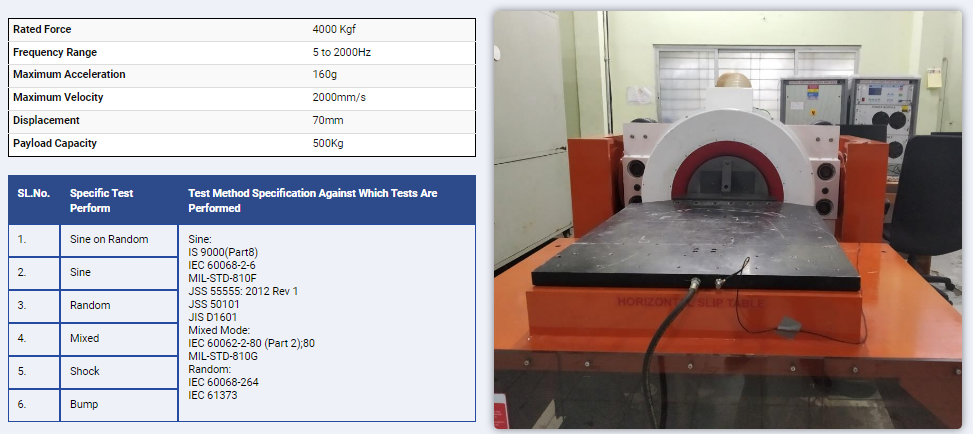
Our vibration testing services help you ensure the reliability of your products. We conduct various types of Vibration tests as per different national and international test standards like IEC 60068, MIL-STD – 810H, MIL-STD-2164A, ASTM D999,
JSS 5855, JSS 55555, ISO 9022-3:1998, ISO 16750-3:2012, DIN EN 60068-2-27, IS 9000-7, IEC 60571 and so on.
We use advanced techniques to simulate real-world vibration conditions and identify potential issues that can cause failure.
What is Vibration Testing?
Vibration testing is a crucial step in the product development process to ensure that products can withstand real-world conditions. We offer a variety of vibration testing services to help you identify potential issues and ensure that your products meet the highest standards of quality and reliability.
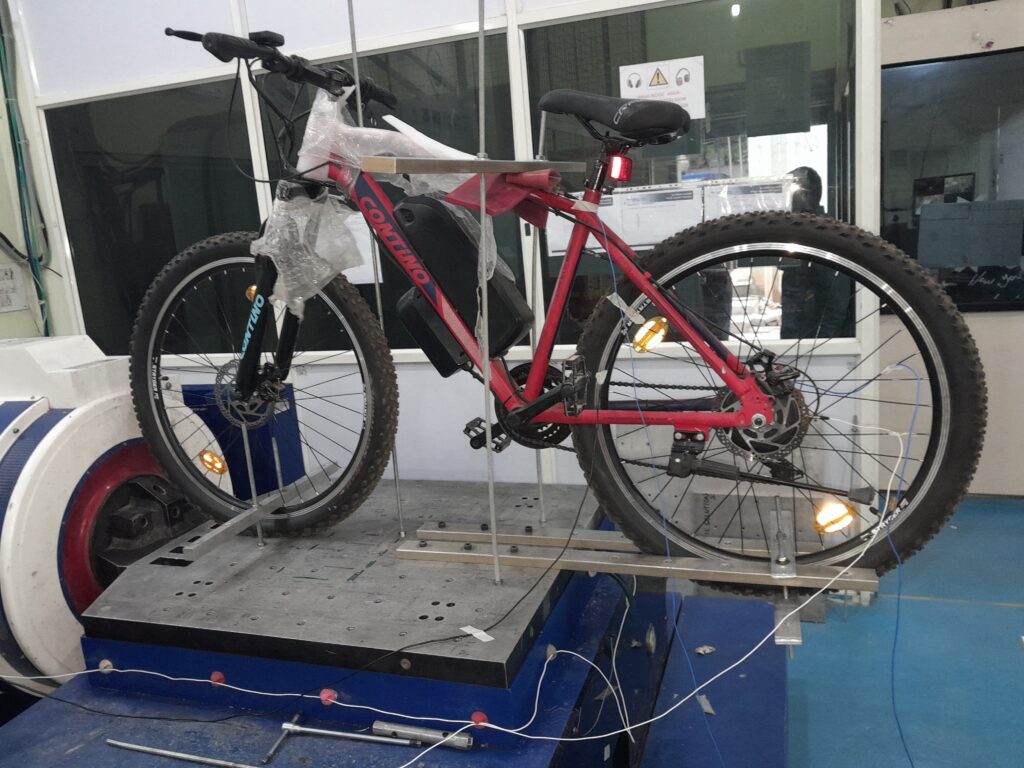
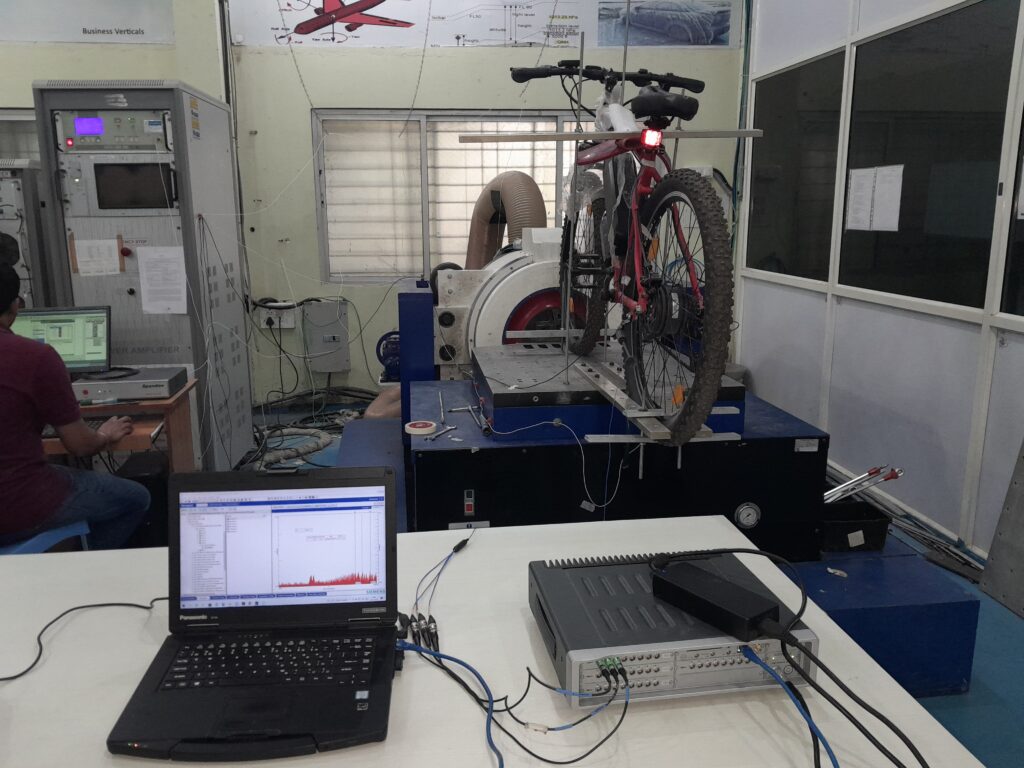
BE Analytics Vibration Test Facilities
-
Random Vibration Testing
-
Sinusoidal Vibration Testing
-
Mechanical Shock Testing
-
Random on Random Vibration Testing
-
Bump Testing
-
Highly Accelerated Life Testing (HALT) test
-
Many more....
What is Random Vibration Testing
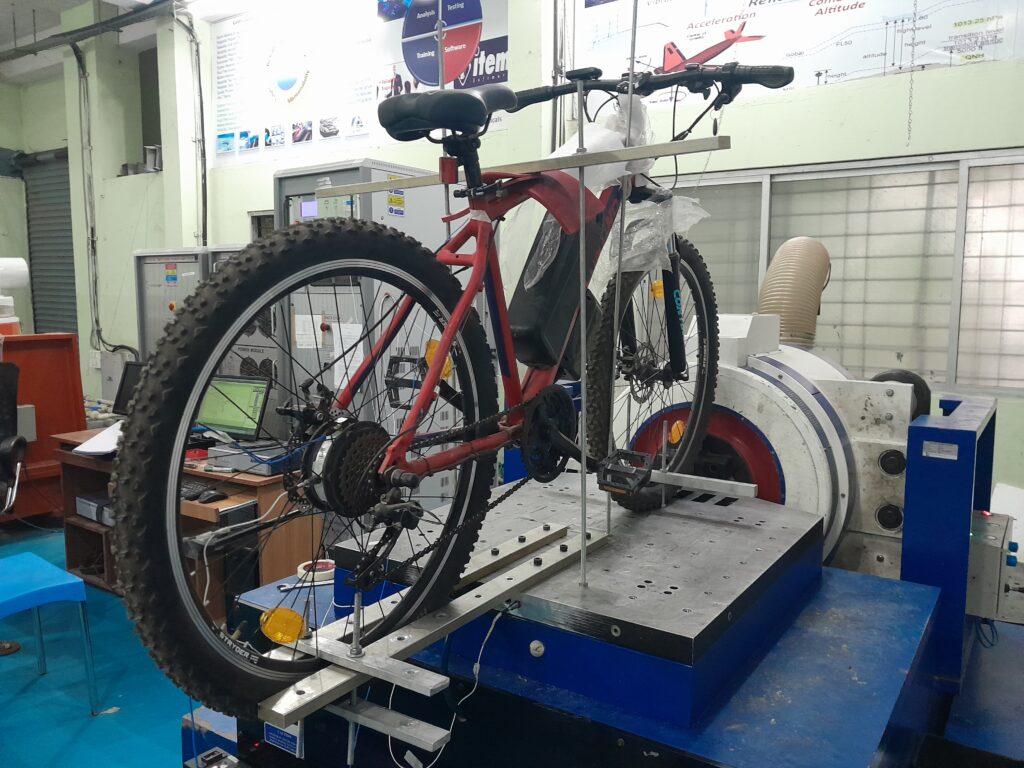
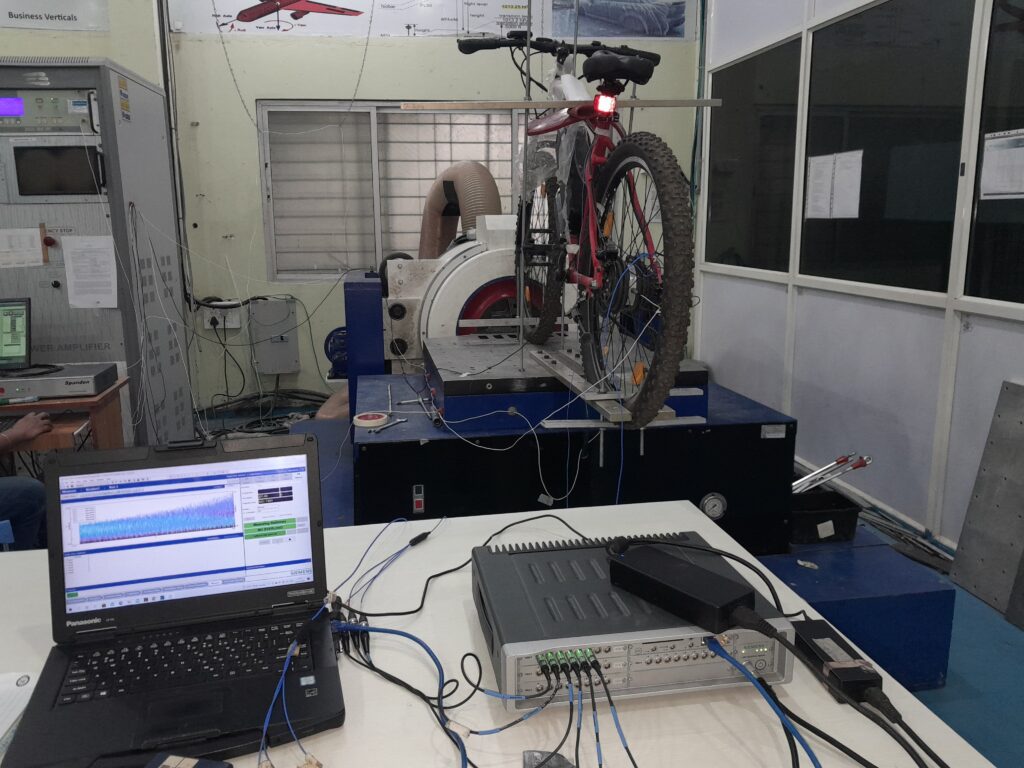
Random vibration testing is a type of vibration testing that simulates real-world vibration environments by applying random vibration energy across a broad frequency spectrum. It is used to evaluate the reliability and durability of products in various industries such as aerospace, automotive, and electronics.
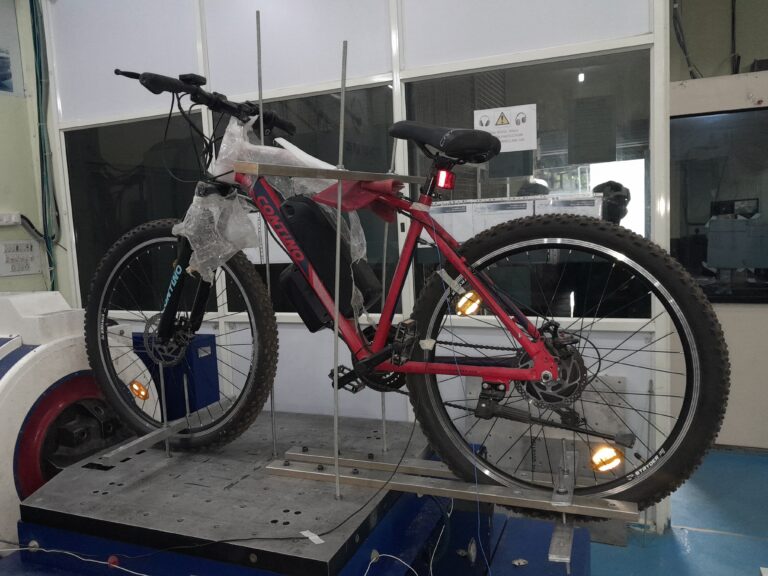
What is Sinusoidal Vibration Testing
Sinusoidal vibration testing is a type of vibration testing that applies a single-frequency sine wave vibration to a product. It is used to evaluate the strength and durability of products and to determine their natural frequencies and resonant points.
Mechanical Shock Testing
Mechanical shock testing is a type of testing that simulates the sudden impact that a product might experience during shipping or use. It involves exposing the product to a sudden high-acceleration shock pulse and evaluating its ability to withstand the shock.
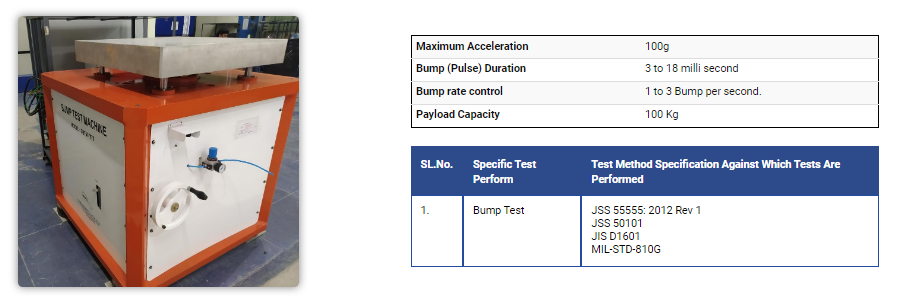
What is Bump Test
A Bump Test is a type of mechanical shock test that simulates the impact a product may experience during transportation. It involves dropping or striking a product with a controlled force to assess its ability to withstand sudden impacts.
What is Sine on Random Test
A Sine on Random test is a type of vibration test that combines sinusoidal (pure tone) vibration with random vibration. This type of testing is often used to simulate the types of vibration that a product might experience in the field. This type of testing is commonly used in industries such as aerospace, automotive, and defense to test the reliability and durability of products that will be exposed to complex vibration environments.
What is Package Testing
Package testing involves subjecting a product’s packaging to various tests to ensure that it can protect the product during transportation and storage. It includes tests such as drop testing, compression testing, vibration testing, and environmental testing.
What is Transportation Testing
Transportation testing involves subjecting a product to various tests that simulate the rigors of transportation. It includes tests such as vibration testing, shock testing, temperature testing, and humidity testing to evaluate the product’s durability during shipping and handling.
What is Highly Accelerated Life Testing (HALT) Test?
HALT stands for Highly Accelerated Life Testing. It is a stress testing method used to identify design and manufacturing defects in electronic and mechanical systems. HALT involves exposing a product to a range of extreme temperature and vibration conditions to accelerate failure modes and identify potential weaknesses in the design or manufacturing process. The goal of HALT is to identify failure points and make design improvements to improve the product’s reliability and longevity.
Why Choose us?
-
State-of-the-art facilities and equipment
-
Experienced and knowledgeable engineers
-
Quick turnaround times
-
Competitive pricing
-
Customized testing solutions to fit your specific needs
Frequently Asked Questions
Vibration testing is a dynamic environmental simulation used to verify that mechanical, electronic, and electromechanical products can survive the rigorous forces they encounter during transportation, handling, and operation. By mimicking real-world dynamic stress profiles under controlled conditions, this testing helps engineers identify hidden structural fatigue, looseness, or component vulnerabilities before a product reaches the market.
- Random Vibration Testing: Simulates chaotic, unpredictable frequencies like road transport or turbulence.
- Sinusoidal Vibration Testing: Applies a single-frequency sine wave to sweep for resonances and weak points.
- Mechanical Shock & Bump Testing: Mimulates high-impact collisions or sudden shocks experienced during air freight or handling.
- Advanced Mixed-Mode Tests: Executes complex profiles like Random-on-Random and Sine-on-Random testing.
- Highly Accelerated Life Testing (HALT): Subjects hardware to combined, extreme thermal and multi-axis vibrational stresses to uncover latent flaws fast
ur reliability testing is performed in absolute compliance with stringent global regulatory frameworks. Supported standards include MIL-STD-810H and MIL-STD-2164A for defense hardware, IEC 60068 and IS 9000-7 for electronics, ISO 16750-3 for automotive systems, ASTM D999 for shipping container integrity, and special standards like JSS 55555, JSS 5855, IEC 60571, and DIN EN 60068-2-27
Vibration testing is highly essential for any sector where product breakdown could result in severe warranty liabilities or safety hazards. We provide comprehensive multi-axis validation across high-tech domains like Aerospace, Automotive, Defence, Medical Devices, Railways, Telecommunications, and Consumer Electronics