
Industrial Safety and Reliability Engineering Services
BE Analytic provides industrial safety and reliability engineering services built on IEC 61508 for manufacturing plants, chemical facilities, and critical infrastructure. Industrial safety and reliability work deals with risk assessment and with the methods used to enhance the safety and reliability of complex technological systems — nuclear power plants, chemical plants, hazardous-waste facilities, space systems, offshore and maritime systems, transportation networks, constructed infrastructure, and manufacturing plants. Across all of these, the goal is the same: identify hazards, quantify risk, and ensure systems are designed and operated to control that risk to an acceptable level.
IEC 61508 is the international standard for electrical, electronic, and programmable electronic safety-related systems. It sets out the requirements for ensuring systems are designed, implemented, operated, and maintained to provide the required Safety Integrity Level (SIL). BE Analytic is an expert in delivering services based on IEC standards, providing end-to-end industrial RAMS support as well as cost-effective methods for implementing Reliability Centred Maintenance.
Why Industrial Safety Analysis Is Essential
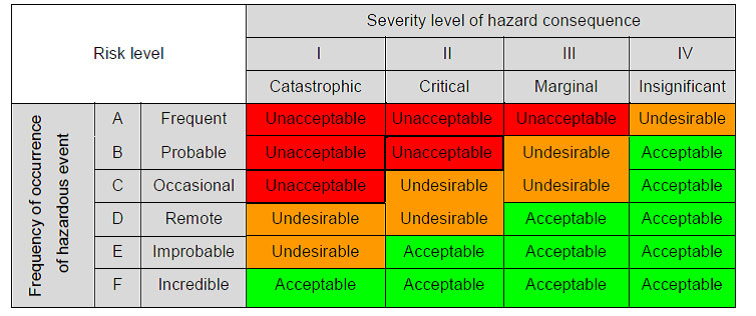
In industrial environments, the consequences of failure can be catastrophic — to people, to the environment, and to the business. Industrial safety analysis exists to prevent those outcomes by systematically identifying what can go wrong, how likely it is, and how severe the consequences would be. Risk classification is fundamentally the combination of hazard consequence and hazard probability: a hazard that is both likely and severe demands far more rigorous control than one that is rare and minor.
A structured industrial safety program does more than satisfy regulators. It protects workers, prevents costly incidents and shutdowns, reduces insurance exposure, and demonstrates due diligence. By quantifying risk, it also lets operators invest in protection where it genuinely reduces danger, rather than spreading safety spending without focus.
Our Industrial Safety and Reliability Services
We provide the complete set of analyses required to assess and improve industrial safety and reliability across systems, plants, and infrastructure.
Industrial Safety Assessment and SIL Determination
We perform hazard identification and risk assessment to determine the Safety Integrity Level required for each safety function, following IEC 61508. SIL determination establishes how much risk reduction a safety-related system must deliver, providing the foundation for all downstream design and verification activity.
RAMS Analysis for Industrial Systems and Plants
We deliver full Reliability, Availability, Maintainability, and Safety analysis for industrial systems — modelling how equipment reliability translates into plant availability, identifying critical assets, and quantifying the impact of failures on production and safety. This gives operators a clear, prioritised picture of where reliability improvements deliver the greatest value.
FMEA, FTA, and HAZOP for Industrial Processes
We perform Failure Mode and Effects Analysis, Fault Tree Analysis, and support Hazard and Operability (HAZOP) studies for industrial processes and equipment. Together these methods provide both bottom-up (FMEA) and top-down (FTA) views of how failures arise and propagate, ensuring hazards are systematically identified and controlled.
Reliability Centred Maintenance (RCM)
RCM determines the most cost-effective maintenance strategy for each asset — preventive, predictive, or run-to-failure — based on the consequences of failure. We help industrial operators implement RCM to cut unnecessary maintenance, extend equipment life, and improve availability without inflating maintenance budgets.
Life Cycle Cost Analysis and Spare Parts Optimisation
We build life cycle cost models that balance reliability, availability, and maintenance cost over the life of an asset, and we optimise spare-parts holdings so availability targets are met without tying up excess capital in inventory.
Risk Assessment and Safety Case Development
We compile hazard analysis, SIL assessments, and verification evidence into structured risk assessments and safety cases that demonstrate a system is safe to operate. These documents support regulatory approval and provide defensible evidence of due diligence.
Industries and Applications We Serve
We deliver industrial safety and reliability services for nuclear power plants, chemical and process plants, manufacturing and factory automation, offshore and maritime systems, HVAC and building systems, water and wastewater treatment, hazardous-waste facilities, and constructed infrastructure. Across all of these, our work follows recognised IEC standards and is tailored to the specific hazards and operating conditions of each application.
Explore our full Reliability Engineering Service portfolio →
Standards We Apply
Our industrial safety and reliability work is grounded in IEC 61508 (Functional Safety of E/E/PE Safety-Related Systems) and related IEC standards, along with established methodologies for RAMS analysis, FMEA, FTA, HAZOP, and Reliability Centred Maintenance. We align deliverables with the expectations of operators, EPC contractors, and independent assessors.
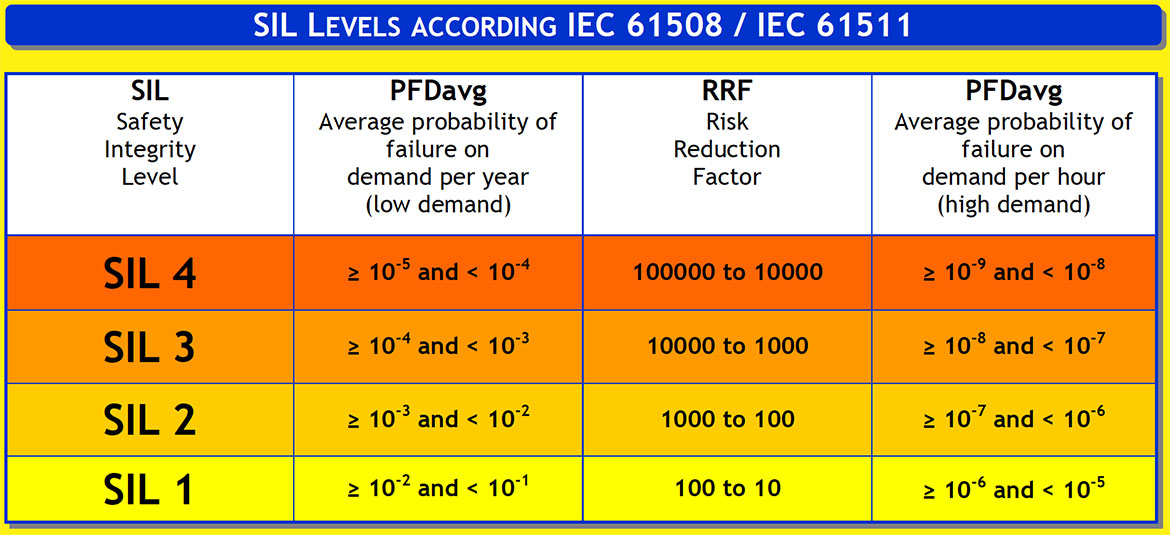
SIL Levels According to IEC 61508 / IEC 61511
Safety and Reliability of Industrial Products, Systems and Structures deal with a risk assessment to the development and application of methods for the enhancement of the safety and reliability of complex technological systems, like nuclear power plants, chemical plants, hazardous waste facilities, space systems, offshore and maritime systems, transportation systems, constructed infrastructure and manufacturing plants.
IEC 61508 is the international standard for electrical, electronic and programmable electronic safety-related systems. It sets out the requirements for ensuring that systems are designed, implemented, operated and maintained to provide the required safety integrity level (SIL).
BE Analytic Solutions is an expert in providing services based on all IEC standards to fulfill the required safety and quality standards for Industrial systems. BE Analytic provides end-to-end comprehensive services for Industrial RAMS, and also provides methods to implement Reliability Centred Maintenance in a cost-effective approach.
Frequently Asked Questions About Industrial Safety & Functional Safety
Everything you need to know about SIL, LOPA, and risk reduction for industrial facilities — covering IEC 61508, IEC 61511, ISO 13849, and functional safety compliance used by manufacturers, EPCs, and plant operators worldwide
IEC 61508 is the general, industry-independent functional safety standard for electrical, electronic, and programmable electronic systems. IEC 61511 is the sector-specific standard for the process industry, derived from IEC 61508. Manufacturers of safety devices typically work to IEC 61508, while process plant operators and integrators usually work to IEC 61511.
It depends on the application and jurisdiction. Where a control system performs a safety function, demonstrating the required SIL is generally expected and is often a regulatory or insurer requirement. Even where not strictly mandated, a documented SIL assessment is strong evidence of due diligence.
SIL stands for Safety Integrity Level. It’s a measure of risk reduction provided by a Safety Instrumented Function, SIF. SIL is determined using methods like LOPA, Risk Graph, or Fault Tree Analysis per IEC 61508/IEC 61511. It ranges from SIL 1 to SIL 4, with SIL 4 providing the highest risk reduction. The required SIL depends on hazard severity, likelihood, and number of people at risk.
SIL verification proves your SIF design can achieve the target SIL level on paper. It calculates PFDavg, Probability of Failure on Demand, using failure rates, proof test intervals, and architecture. SIL validation proves the SIF actually works as designed after installation through functional tests. IEC 61511 requires both: verify during design, validate during commissioning.
IEC 61508 is the umbrella functional safety standard for electrical/electronic systems across industries. IEC 61511 is its process industry version. ISO 13849 is specifically for machinery safety and uses PL, Performance Level, instead of SIL. If you’re protecting people around machines, use ISO 13849. If you’re protecting plants/processes with SIS, use IEC 61508/61511. Many factories need both.